Since its launch in 2021, the Construction Technology Innovation Laboratory (CTIL) has worked closely with construction companies in Singapore to identify industry challenges, develop practical solutions and evaluate new technologies under actual operating conditions.
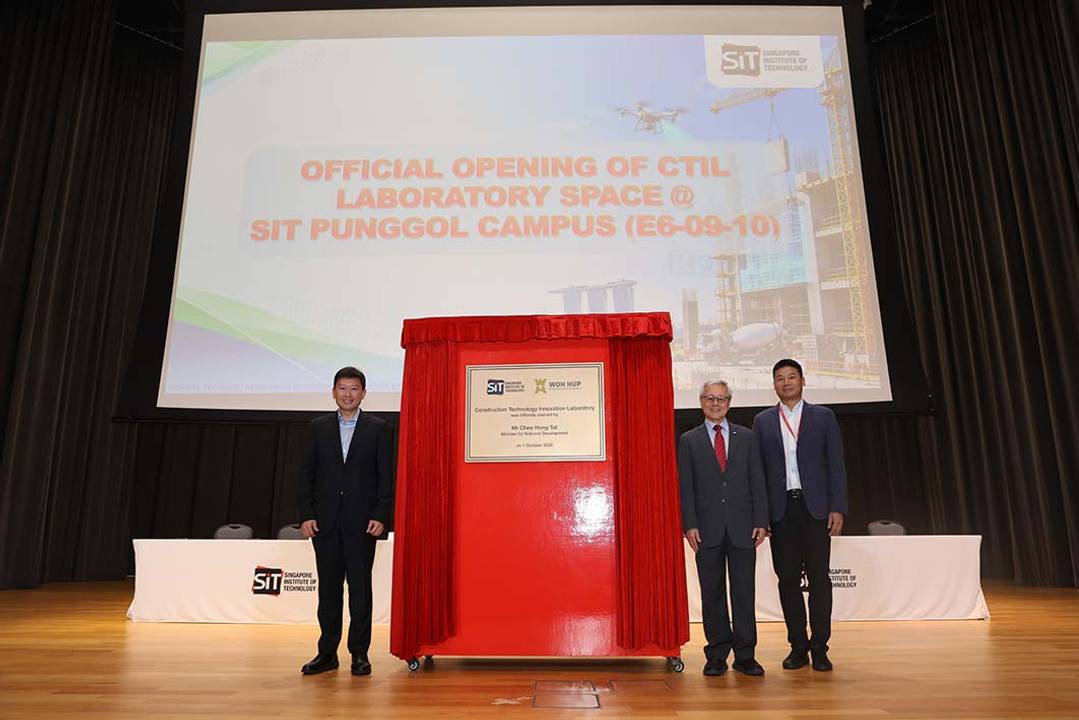
The centre recently opened its facility at the Singapore Institute of Technology’s (SIT) Punggol Campus, marking the next phase of its development. As a co-creation and innovation hub, the facility brings together researchers, students and industry partners to develop, test and showcase solutions for the built environment (BE) sector.
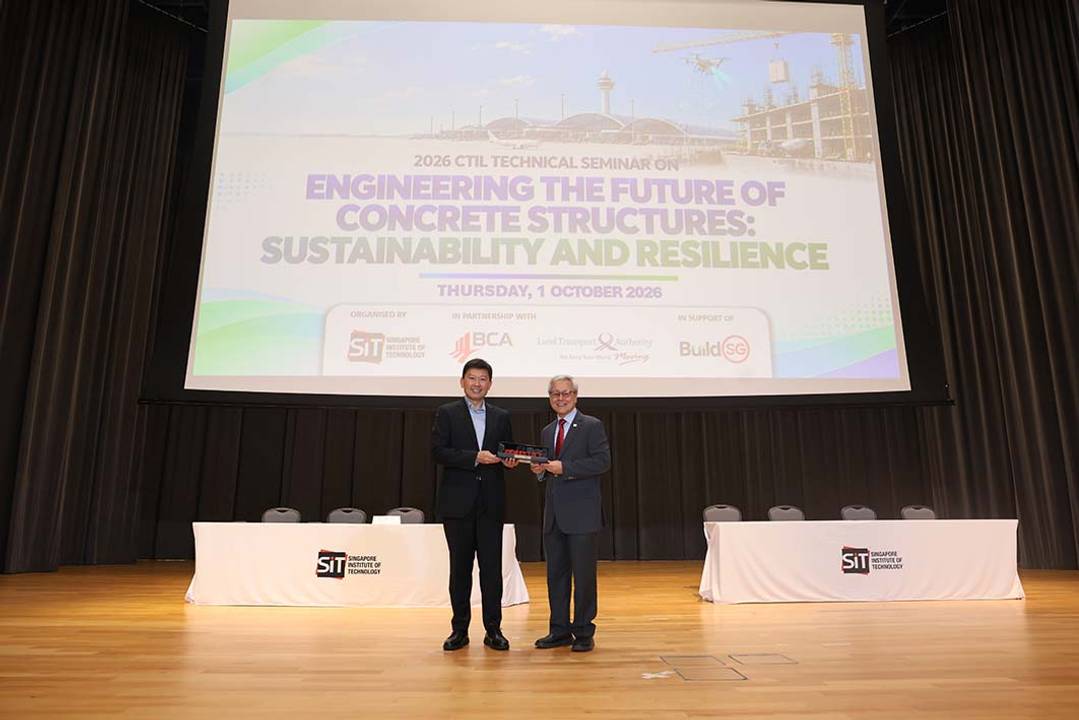
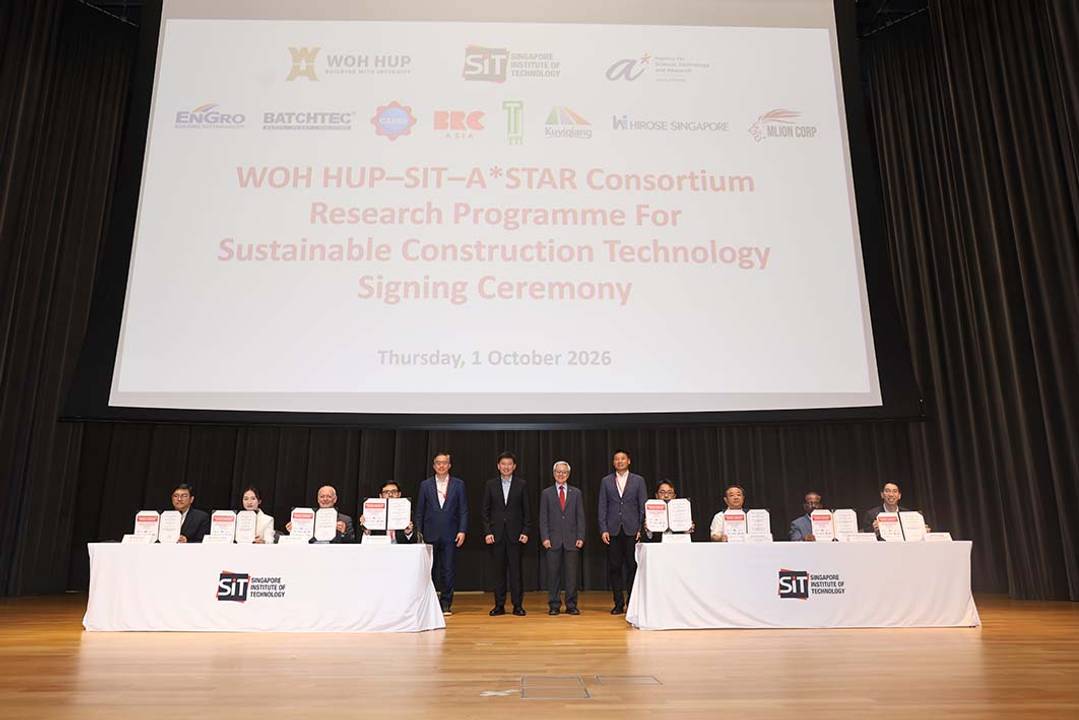
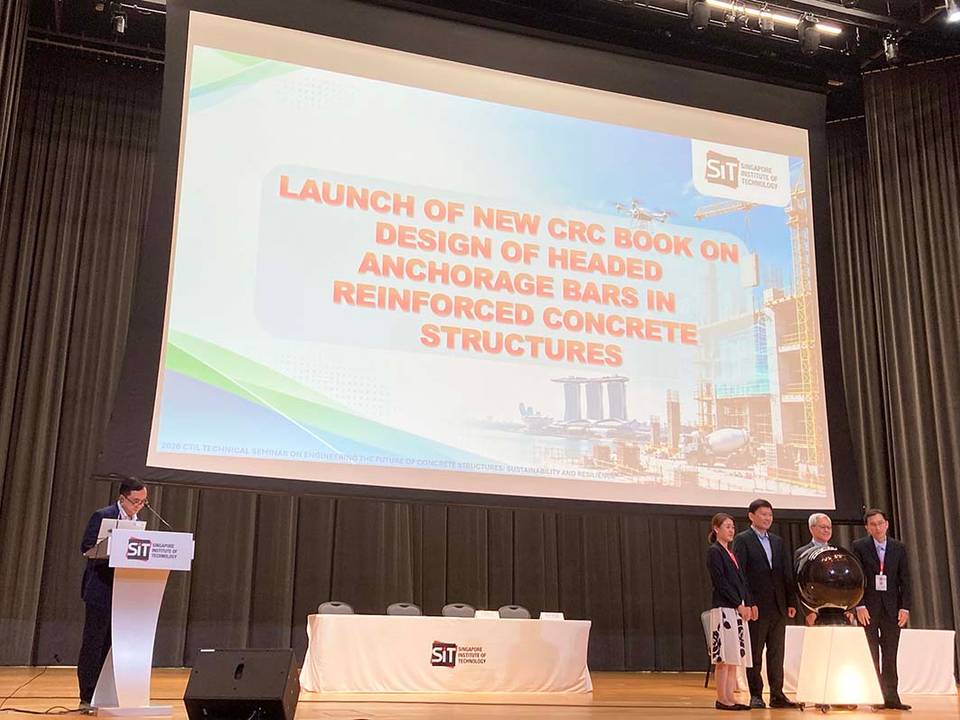
Minister for National Development Chee Hong Tat officially inaugurated the new facility on 1 October 2026, during CTIL’s annual technical seminar at SIT. At the event, he also announced the establishment of the Woh Hup–SIT–A*STAR Consortium for Sustainable Construction Technology, a three-year research programme representing a total investment of S$30.4 million.
In its first phase (2021 to 2026), CTIL completed 13 applied research projects with 26 industry partners. Five technologies have already progressed to deployment in actual construction projects. In 2024, CTIL received recognition at the Institution of Engineers Singapore (IES) Prestigious Engineering Achievement Award for its ultra-low-carbon concrete production system.
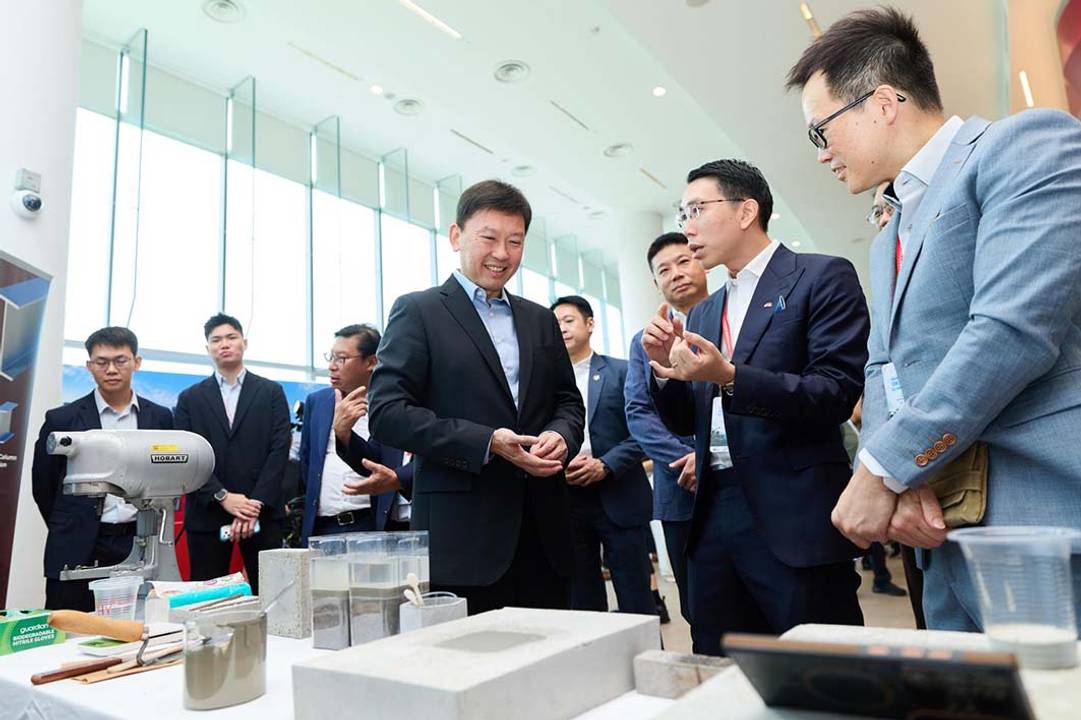
“A key strength of CTIL is its focus on meeting industry needs. Companies bring forward their challenges, researchers contribute expertise, partners co-invest, and real-world construction projects provide opportunities to test the new solutions,” said Mr Chee.
CTIL Phase 1
Established through a collaboration between SIT and Woh Hup, one of Singapore’s largest privately owned construction and civil engineering companies, CTIL focuses on translating research into practical, deployable technologies. Its work spans sustainable construction materials, structural and sub-structural engineering, as well as construction digitalisation and automation.
“From the beginning, CTIL was never intended to work apart from industry. It was designed as a platform where researchers, students and industry practitioners could work side by side to solve the challenges faced on the ground and develop solutions that could be tested and validated under actual operating conditions,” said Prof Chua Kee Chaing, president of SIT.
Phase 1 of CTIL concluded in January 2026. Over this period, the centre:
-
Completed 13 applied research projects with 26 industry partners.
-
Secured S$5.95 million in funding from Woh Hup, government agencies and industry partners.
-
Successfully translated five technologies into deployment on live construction projects.
-
Completed applied research projects with support from the Building and Construction Authority’s (BCA) Built Environment Technology Alliance (BETA) Catalyst Funding Programme.
In addition to research, CTIL fosters capability building through technical seminars, industry workshops, design guides, publications and specialised professional development programmes. It also provides opportunities for undergraduate students, postgraduate researchers and research engineers to work on industry-led applied research projects, helping to develop future-ready engineering talent.
With its new facility at the SIT Punggol Campus, CTIL now has a dedicated space to engage with industry, government agencies and research partners, enabling larger-scale collaborative initiatives, accelerating technology validation and strengthening the translation of research outcomes into industry adoption. These efforts will contribute to Singapore’s ambition to achieve net-zero emissions by 2050. The facility will also support the development and demonstration of emerging technologies, including AI and digital twin solutions for sustainable construction.
Headed anchorage bars
At the seminar, CTIL introduced ‘Design of Headed Anchorage Bars in Reinforced Concrete Structures’, a new technical reference developed with industry partners to help engineers apply the latest design approaches for reinforced concrete structures.
Building on the earlier Association of Consulting Engineers Singapore (ACES) design guide published in 2025, the team further developed and consolidated the design methodology for headed-bar reinforcement into a comprehensive technical book. The work brings together the mechanics of force transfer, product qualification and testing, anchorage verification, detailing requirements and construction control, along with practical procedures and worked examples for engineers.
The book provides an evidence-based reference for the safe and efficient use of headed bars in complex and heavily reinforced concrete structures. By translating research and design principles into practical engineering guidance, it supports wider industry adoption while improving constructability, workmanship and confidence in headed-bar applications.
The work has also facilitated the use of headed bars in three local projects, helping to reduce reinforcement congestion, simplify cage assembly, and enhance concrete placement and compaction. These applications demonstrate tangible improvements in construction quality and productivity.
From lab to site
The examples below illustrate how applied research is being translated into real-world construction projects during CTIL’s first phase. These technologies are either being implemented or are planned for adoption in ongoing Woh Hup projects.
Ultra-low-carbon concrete
CTIL developed a cost-effective aqueous carbon sequestration and utilisation system that produces ultra-low-carbon ready-mixed concrete. The technology uses carbon dioxide-enriched water during concrete production, enabling up to 80% replacement of conventional cement with blast furnace slag while maintaining comparable performance. This cuts embodied carbon by up to 65%. The technology has progressed to pilot production and field testing with industry partners.
“This is not just a promising idea in the lab. It has already been deployed in actual projects, including the completed Copen Grand and Lumina Grand executive condominium developments, as well as Union Square and the redevelopment of Clifford Centre, which are currently under construction,” shared Mr Chee.
Histeel
This high-performance steel kingpost system boosts productivity in deep excavation works. The lightweight structural system increases working space, minimises material usage and enhances site safety compared with conventional excavation support systems.
“Working closely with industry partners Woh Hup and TTJ Design & Engineering, CTIL developed a welding protocol that allows S690 steel, which is almost twice as strong as conventional S355 steel, to be fabricated into structural sections without compromising its strength,” explained Prof Chua.
“The result is a stronger and lighter construction solution that can use up to 40% less steel by tonnage, while improving productivity and safety on construction sites. The technology has moved beyond the lab and into actual developments, including Newport Plaza and Marina View Residences, with BCA approving its use across numerous other projects.”
Headed bars
CTIL worked with industry partners to develop new design guidance supporting the adoption of headed bars in reinforced concrete structures. Headed bars enhance constructability by reducing reinforcement congestion, improving concrete quality and increasing productivity on site. The research has contributed to industry guidance aligned with the latest Eurocode developments (see the ‘Headed anchorage bars’ section above).
High-performance composite steel beams
CTIL developed a high-performance, pre-engineered steel-concrete composite beam system for industrial and commercial buildings. The system reduces embodied carbon while increasing structural efficiency and lowering construction costs, resulting in more sustainable building design.
Steel slag permeable concrete
Steel slag permeable concrete (SSPC) is a low-carbon, multifunctional pavement developed by CTIL that valorises locally produced steel slag. The technology has been deployed at a Woh Hup project site for full-scale demonstration, where its performance in stormwater management, urban heat mitigation and long-term durability is being monitored.
Image credits
Images 1-3: Woh Hup
Image 4: MND
Video: CTIL
Note: For enquiries about CTIL or opportunities to participate, please contact the centre at ctil@singaporetech.edu.sg