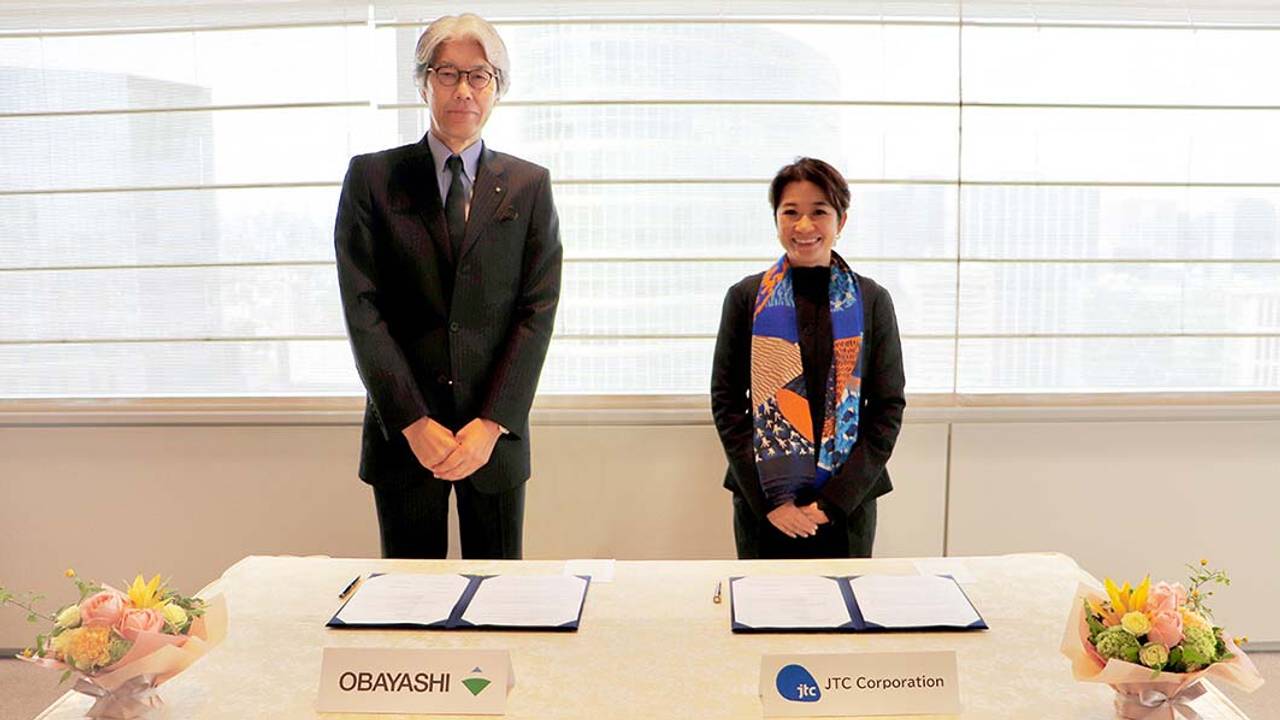
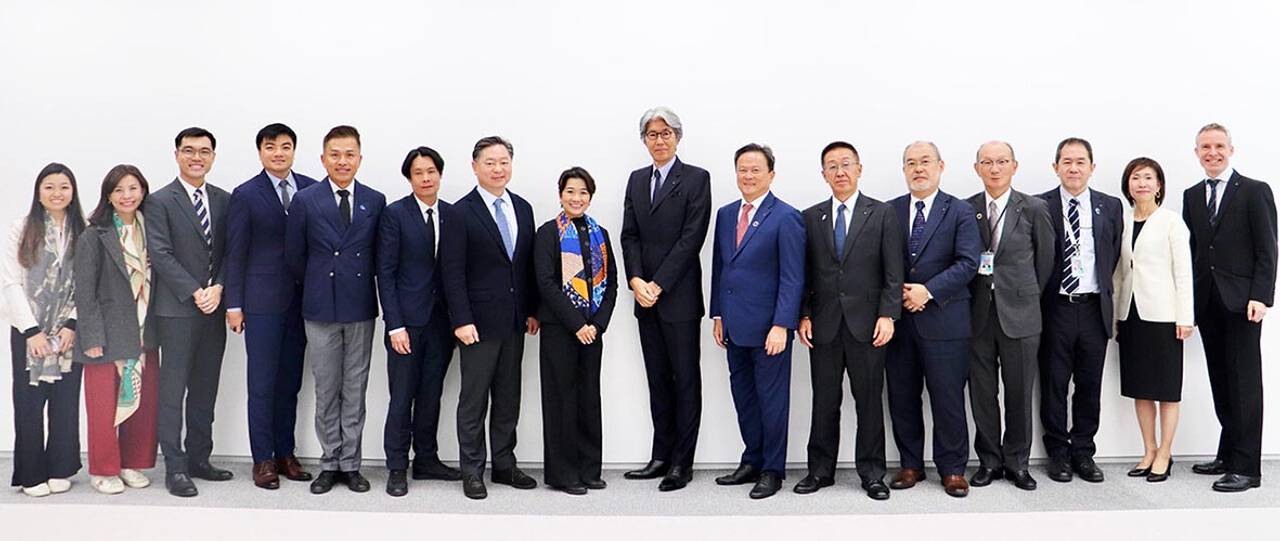
Japan-based contractor Obayashi Corporation and Singapore’s government agency for industrial development, JTC Corporation, have signed a memorandum of understanding (MOU) to collaborate on the development and adoption of construction technologies, focusing on construction robotics.
Japan and Singapore face a common and critical challenge: improving productivity in the construction industry amid shared social issues such as declining birthrates, ageing populations, labour shortages and increasingly complex construction demands, explained Obayashi.
The company noted that, to address these challenges, both countries are making progress in the use of advanced technologies, including construction robotics, such as the automation and autonomous operation of robots and construction machinery on jobsites, as well as digital transformation.
Technologies like construction robotics are expected to contribute to greater efficiency and safety in the industry, as well as help address labour shortages. Obayashi believes that further advancements and cost reductions are anticipated, leading to a wider range of applications in the future.
However, Obayashi highlighted that many challenges remain before construction robotics can be fully implemented. These include the costs associated with their adoption and operation, adaptability to on-site environments, training for operators, and the development of standards and regulatory frameworks.
As one of the basic strategies of its Medium-Term Management Plan 2022, Obayashi has set the goal of “Strengthening and deepening the foundation of its construction business” and is working to improve productivity by “realising innovative construction production systems.” In 2024, Obayashi Construction-Tech Lab Singapore (OCLS) was established, serving as a research and development base in the country to promote collaborative R&D with local universities, research institutions and companies.
With the latest collaboration, Obayashi aims to leverage its extensive construction experience, expertise and R&D capabilities within the testbed environments provided by JTC to accelerate the development of technologies, including construction robotics, and drive the social implementation of these innovations, while aligning with JTC’s vision and goals.
Three initial areas identified for collaboration are:
-
Understanding the factors that make construction sites challenging for robots and how to address them.
-
Trials and development of robotics solutions, such as autonomous site inspection and monitoring robots.
-
Feasibility studies on autonomous and tele-operated heavy construction equipment.
Both parties also aim to drive wider adoption across the construction industry and expect Singapore to further strengthen its position as a leader in innovation and industrial transformation.
“Singapore and Japan share the same challenges of an ageing construction workforce and the need to raise productivity through automation. Our collaboration with Obayashi brings together their strong expertise in robotics and automation and JTC’s strong pipeline of projects to work through the practical barriers to robotics and technology adoption, from site conditions to operational standards,” said Jacqueline Poh, CEO of JTC Corporation. “If we can establish what ‘robot-ready’ benchmarks look like, it gives developers and contractors a clear path to adoption in Singapore’s built environment.”
“Leveraging the milestone of 60 years since commencing operations in Singapore, and building on the establishment of OCLS in 2024, Obayashi is not only expanding its business locally but also further strengthening collaboration with JTC and the Singapore government to promote the introduction of robotics and other advanced technologies in the construction sector,” said Toshimi Sato, president and CEO of Obayashi Corporation.
“Moreover, by combining Obayashi’s extensive experience in robotics and automation with JTC and the Building and Construction Authority’s (BCA) forward‑looking initiatives, active investment in R&D, and strong societal demand for productivity improvements, we are confident that Singapore can become a global leader in the adoption of construction automation technologies,” added Mr Sato.
All images: Obayashi