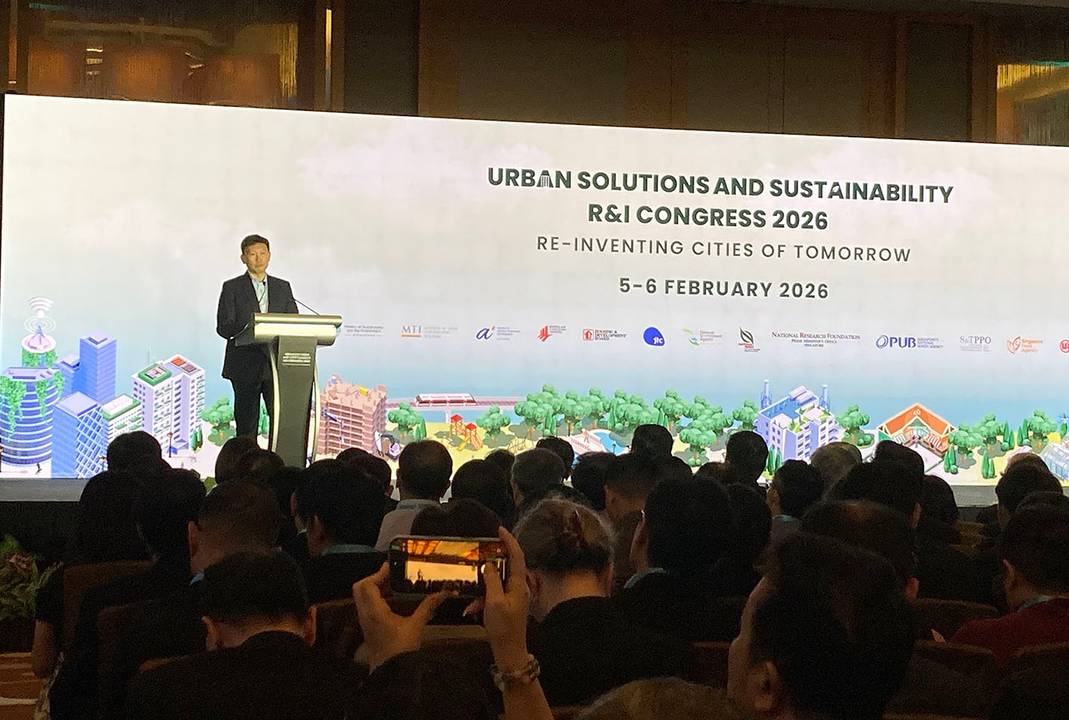
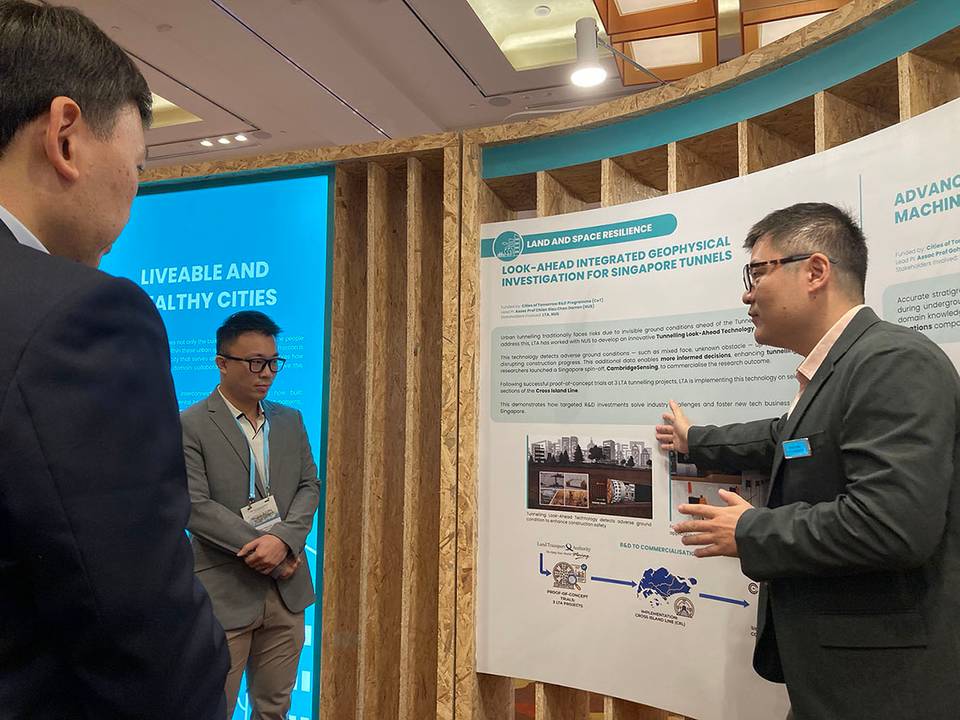
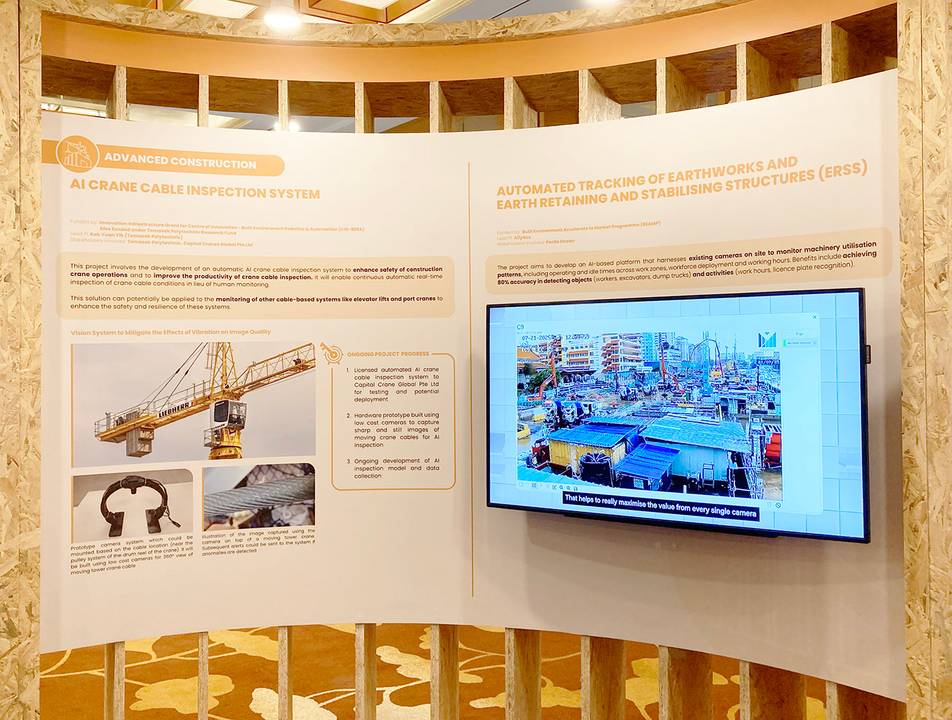
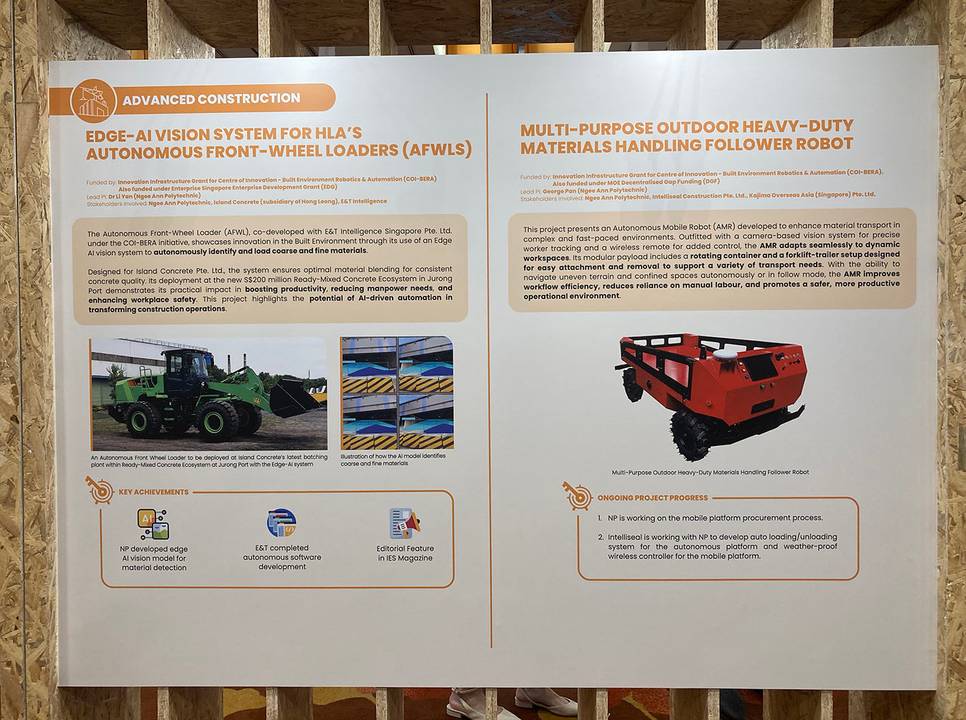
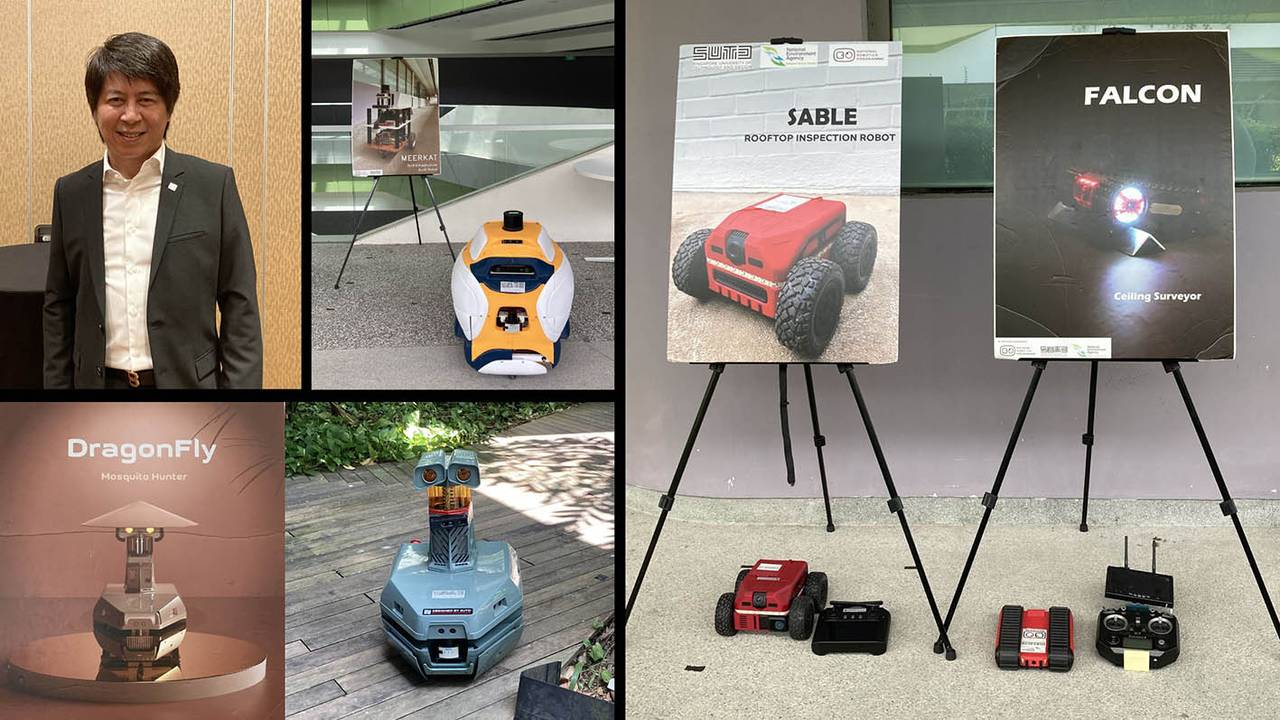
The Urban Solutions and Sustainability (USS) Research & Innovation Congress, held on 5-6 February 2026 at the Sands Expo and Convention Centre in Singapore, brought together participants across government agencies, academia and industry to exchange ideas and explore innovative solutions on urban sustainability.
USS is one of the domains under the Research, Innovation and Enterprise (RIE) 2030 plan, a five-year strategy that will strengthen Singapore’s competitiveness and resilience, and better position the nation to navigate the challenges and opportunities of the global landscape.
The theme for this year’s congress, ‘Re-inventing Cities of Tomorrow’, reflects the importance of harnessing technology and innovation to reimagine and reshape the future of Singapore’s urban environment.
In his opening speech, Minister for National Development Chee Hong Tat highlighted the importance of research and innovation (R&I) in maintaining Singapore’s competitive edge and ensuring a high-quality living environment.
“Many good research ideas struggle to move out of the lab due to technical, regulatory, or commercial barriers,” he said. “To ensure that our R&D investments translate into real impact, we must strengthen the pathways that bring innovations from proof-of-concept to real-world implementation.
“This is where the government can play a role – by providing funding support to help companies strengthen their business case, and look at reviewing and re-engineering our processes to ensure that they keep pace with the speed of innovation.”
To that end, Mr Chee announced new initiatives to accelerate the translation of R&I into real-world outcomes.
BE AI Centre of Excellence
The Ministry of National Development (MND), in partnership with the Singapore University of Technology and Design (SUTD), is launching a new S$30 million Built Environment AI Centre of Excellence (BE AI CoE), tapping on the RIE funds.
The CoE will foster collaboration among government agencies, academia and industry to develop smarter and more efficient AI-driven solutions that can address main challenges in the BE sector, including:
-
Manpower shortages in the labour-intensive construction and facilities management sectors through AI-augmented robotics and automation.
-
Climate change impacts through advanced multi-objective modelling and simulation that enable faster, more comprehensive analysis of environmental impacts, energy efficiency optimisation, and adaptive design strategies for severe weather events.
The use of AI is useful in construction, noted Mr Chee, “where AI-powered software systems can intelligently orchestrate multiple autonomous machinery for our building sites, facilitating seamless operations that can reduce costly delays, while enhancing construction safety.”
The CoE aims to transform work processes to enhance productivity, sustainability and liveability. It will also strengthen Singapore’s long-term research and industry capabilities by attracting and nurturing ‘AI bilinguals’ – professionals with both technical AI expertise and practical understanding of BE sector challenges.
Furthermore, AI is a critical enabler to ensure that MND’s key priorities, such as large-scale estate rejuvenation, are effectively met. Mr Chee pointed out that “by 2040, more than half of Singapore’s public housing estates will be over 50 years old, making large-scale estate rejuvenation critical to ensuring a quality living environment for all residents.
“To support this long-term endeavour, we are exploring productive demolition techniques and building lifespan modelling, developing advanced construction materials with enhanced durability, and conducting social and behavioural research to better understand public sentiments surrounding estate rejuvenation and upgrading programmes.”
Mr Chee emphasised that AI can help the industry to “process vast amounts of data, uncover new insights, and automate complex tasks with greater speed and precision.” At the same time, he mentioned that despite these benefits, “we are not looking at AI like some kind of silver bullet that can solve all problems.
“We are going to approach AI sensibly, recognising its usefulness as a tool to help us. It must be paired with human judgement and sector-specific expertise. I see it as a complement to our people to help us do our jobs better, more efficiently, and hopefully take away some of the more tedious, time-consuming tasks so that our people can focus on work that requires human touch and judgement.”
Prof Tai Lee Siang, deputy president/chief innovation & enterprise officer at SUTD, will lead the new CoE. Speaking to SEAC during the USS R&I Congress, Prof Tai shared that the work at this CoE will address the whole ecosystem. “Whenever we have a workstream, we have to look at the downstream ecosystem that will benefit from the research and invite them to participate either as observer or later on as active implementer.”
“In building development, there are four key milestones: urban planning, building design, construction and facilities management,” explained Prof Tai. “So, there will be four areas of research to look at how AI can be used in each of those phases.”
From prototypes to market-ready solutions
Mr Chee further introduced the USS Translation Fund, a new S$40 million funding programme by MND and the Ministry of Sustainability and the Environment (MSE) to support local companies develop, pilot and commercialise promising urban and sustainability solutions.
Administered by the USS Innovation & Enterprise Office (USS IEO), a national platform hosted by the Agency for Science, Technology and Research (A*STAR), the fund helps companies translate high-potential USS research into cost-effective market-ready products.
It will support key activities such as engineering development, test-bedding, and pilot demonstrations across major USS sectors, including the built environment, water, environmental services, and agri-food. Eligible projects must address national priorities, originate from previous publicly-funded research, possess a functional prototype and show a clear pathway to commercialisation.
The fund is a new initiative under the RIE 2030 plan. “It will help to address critical barriers in technology translation, such as high upfront capital costs, and technological risks associated with early adoption,” said Mr Chee.
Accelerating adoption process
To complement the USS Translation Fund, MND will launch a new pilot green lane procurement programme, known as ‘Streamlined Procurement of Research Innovations & Technology’ (SPRINT). It aims to streamline procurement and expedite government adoption of innovative research products.
SPRINT is co-chaired by MND and Enterprise Singapore (ESG), and administered by the Housing & Development Board (HDB) and the Building and Construction Authority (BCA). “This new scheme will help to expedite the offtake of innovative R&I products,” shared Mr Chee. “For a start, SPRINT will be piloted by the MND Family agencies, before we extend it across the broader public sector.”
During the pilot phase, companies that meet SPRINT’s requirements will become qualified vendors, enabling direct procurement by MND Family agencies. This streamlined process is expected to halve procurement timelines. For example, an SME with a BE solution that has been successfully piloted by an MND agency can be referred to SPRINT to help them scale up their solution. If the company and their solution qualify under SPRINT, other MND agencies can directly procure their solutions.
SPRINT qualification helps companies establish their credentials as qualified government suppliers, widen their market access, and build their industry track records. Beyond this, collaboration with the public sector enables these companies to strengthen their technical and research capabilities to develop impactful and scalable solutions for public good.