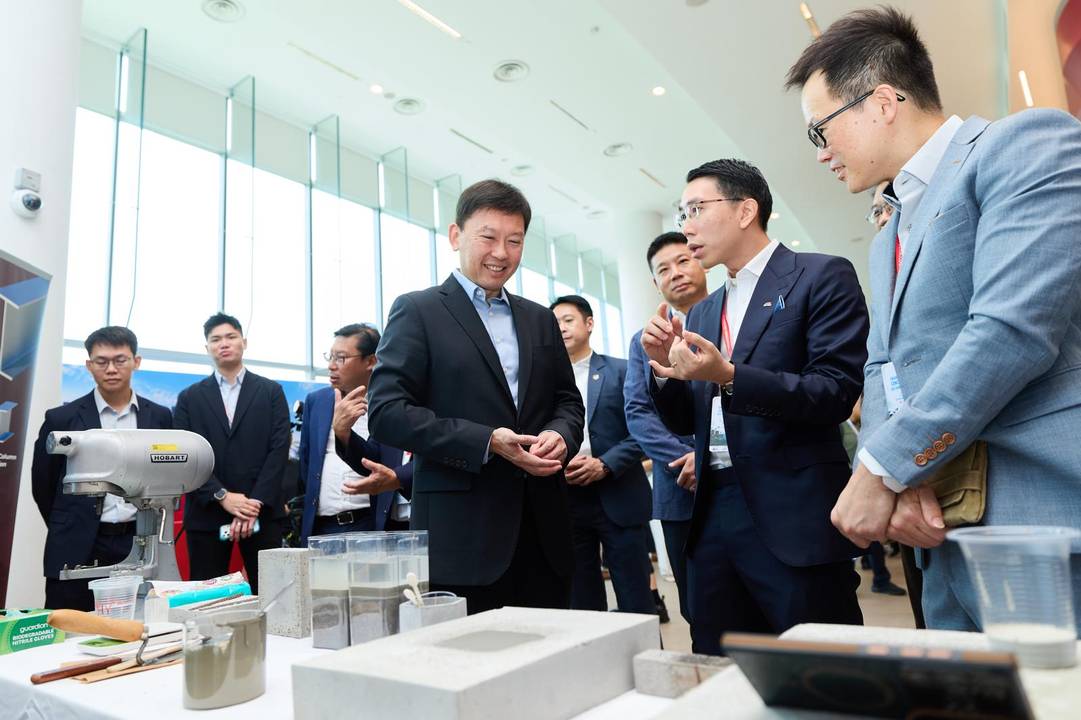
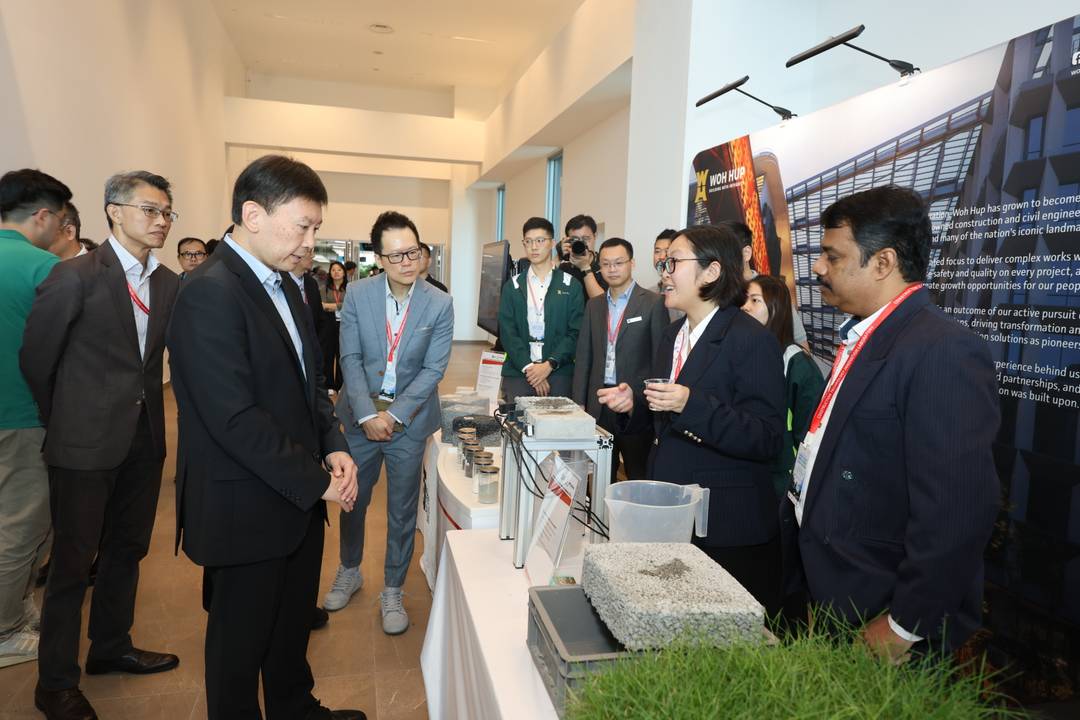
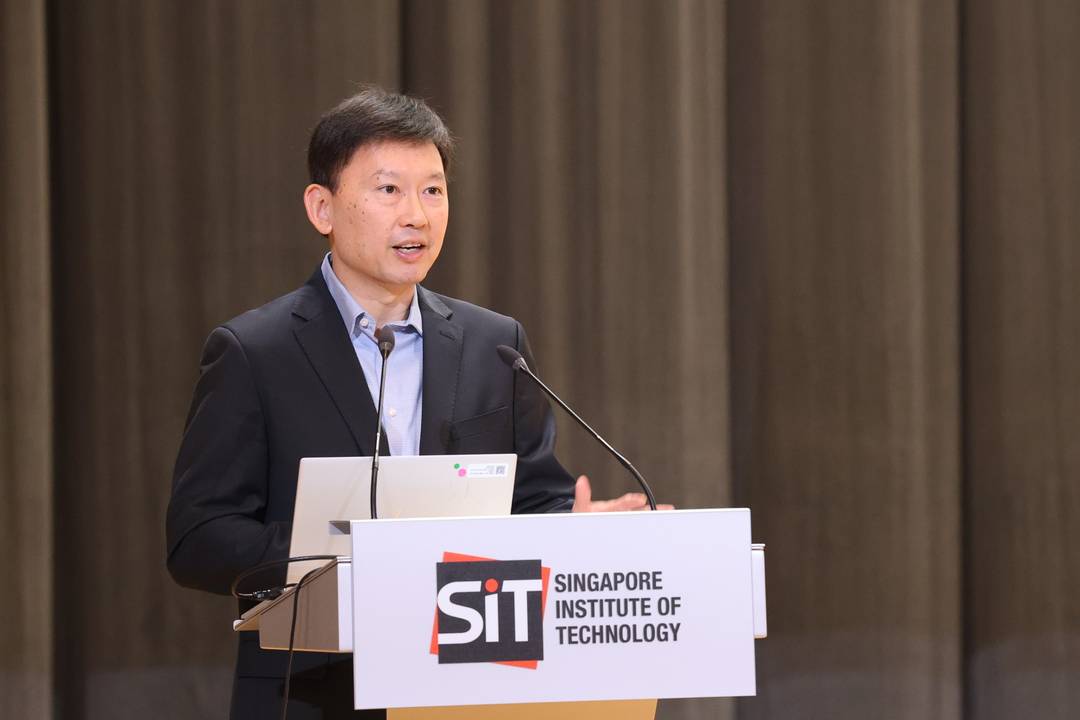
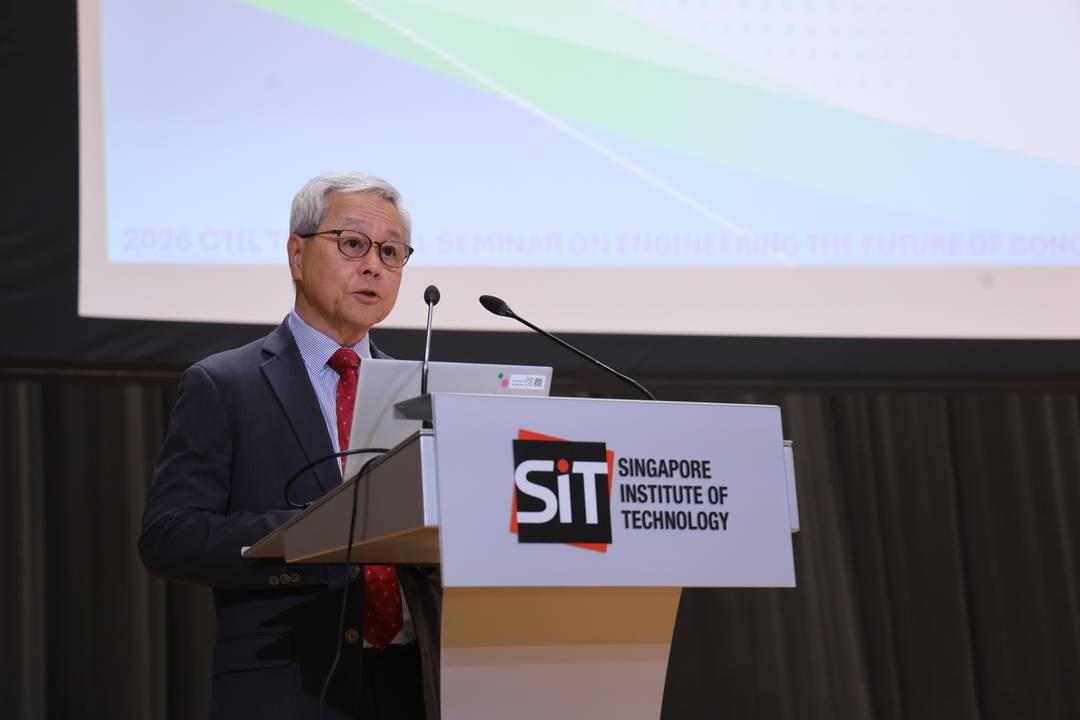
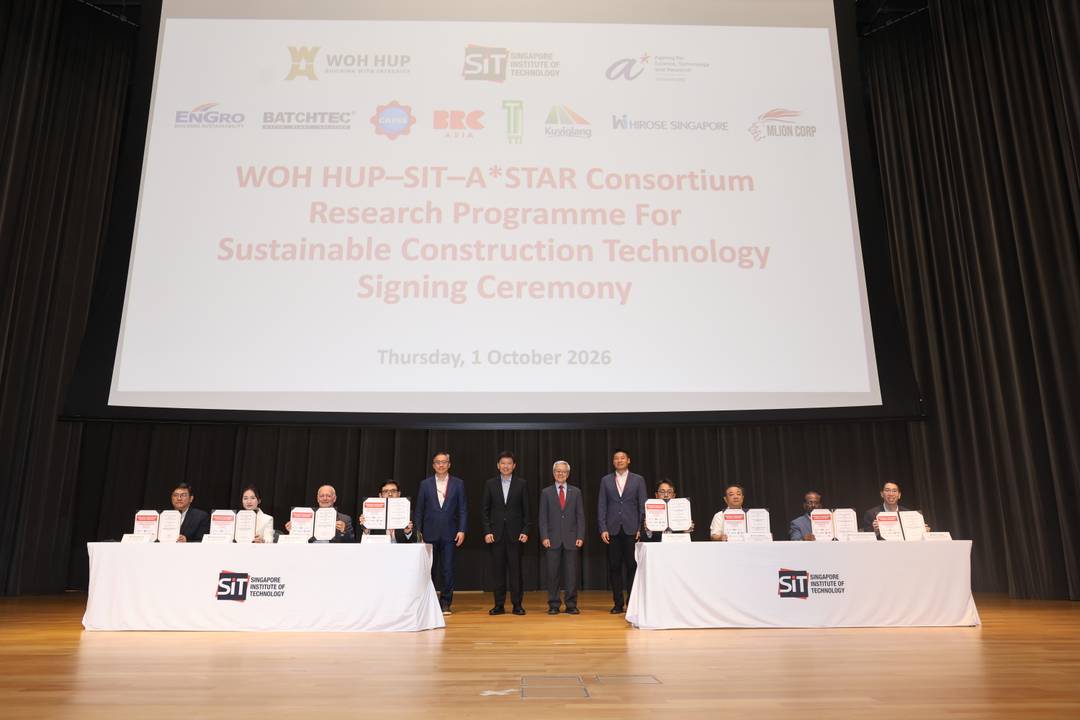
The Woh Hup–SIT–A*STAR Consortium for Sustainable Construction Technology, a research programme with an overall investment of S$30.4 million, comprising funding and in-kind contributions from SIT, A*STAR, and industry partners, launched on 1 October 2026.
Supported by Singapore’s Research, Innovation, and Enterprise 2025 (RIE2025) plan, the initiative aims to accelerate the development, validation, and deployment of next-generation sustainable construction technologies. Announced at the Construction Technology Innovation Laboratory’s (CTIL) Annual Technical Seminar held at the Singapore Institute of Technology (SIT), the consortium was formalised through a signing witnessed by the Minister for National Development, Mr Chee Hong Tat.
The three-year research programme brings together SIT, A*STAR, Woh Hup (Private) Limited, and seven other industry partners to develop practical solutions that reduce embodied carbon, improve construction productivity, and strengthen the resilience of Singapore’s built environment sector. By drawing on expertise across the full value chain, the consortium aims to shorten the pathway from research to deployment on actual construction projects.
Co-developing solutions and talent for the built environment
The consortium is structured around industry-identified challenges and real-world deployment opportunities. Industry partners will contribute project sites, operational expertise, and validation environments to test and refine technologies under actual construction conditions, helping to accelerate adoption across the sector.
The research programme is organised into seven research projects that address some of the built environment sector’s most pressing challenges. Among the projects are efforts to scale up ultra-low embodied carbon concrete production for wider industry adoption and develop AI-powered design tools that help engineers optimise structural designs for lower embodied carbon, cost, and material use.
The programme will also explore new approaches to greener construction materials and innovative structural systems that can be tested and deployed on actual construction projects. One of the seven projects will scale up SIT’s award-winning ultra-low embodied carbon concrete technology, which was developed under CTIL’s Phase 1 launch. The existing technology has already demonstrated up to a 65 per cent reduction in embodied carbon. The next phase under this new research programme will focus on further development, validation, and test bedding with industry partners.
By the end of the programme in 2029, the consortium targets up to a 40 per cent reduction in embodied carbon in urban development applications using the relevant technologies compared with conventional construction approaches. It also aims to create new business opportunities and deliver operational cost savings for industry partners.
Beyond research, talent development is an integral component of the programme. It will support the training of undergraduate and postgraduate students and engage research staff in applied research conducted in close collaboration with industry partners. By embedding students and researchers within industry-led projects, the programme will provide opportunities to work on emerging technologies with direct relevance to the transformation of the built environment sector, helping strengthen Singapore’s future pipeline of engineering and sustainability talent. The programme also supports capability development of industry professionals through specialised training, industry attachments, and technical seminars.
“The built environment sector is facing increasing pressure to reduce embodied carbon while improving productivity and resource efficiency. The challenge is not simply to develop new technologies, but to ensure they can be adopted at scale and create meaningful impact for industry. Through this programme, we will develop and validate technologies that address these challenges, from lower-carbon materials and innovative structural systems to AI-enabled design tools and circular construction solutions,” said Professor Chiew Sing Ping, Head, Construction Technology Innovation Laboratory (CTIL), SIT. “By working closely with industry partners throughout the research process, we can accelerate the translation of these innovations into practice while developing the talent needed to support the sector’s transformation.”
“Addressing sustainability challenges in the built environment requires innovation across advanced materials, engineering and AI-enabled optimisation. Through this consortium, A*STAR is working closely with SIT, Woh Hup, and industry partners to develop and validate practical solutions that can reduce embodied carbon, improve resource efficiency, and strengthen construction productivity. By bringing together complementary capabilities in materials science, engineering, and AI-enabled design and optimisation, alongside industry expertise, we look forward to accelerating the translation of these innovations into real-world applications that create meaningful impact for the sector,” said Professor Lim Keng Hui, Assistant Chief Executive, Science and Engineering Research Council, A*STAR.
“Woh Hup has always believed that meaningful innovation comes from bringing research and industry closer together. Our partnership with SIT, A*STAR, and industry partners gives us the opportunity to co-develop solutions that are not only innovative, but also practical and scalable for the construction industry. As we work towards a lower-carbon built environment, we are committed to contributing our experience, capabilities, and project sites to help turn promising technologies into real-world applications that can make a lasting impact,” said Mr Yong De-Rhong, Executive Director, Woh Hup (Private) Limited.
The new research programme marks the next chapter for CTIL, SIT’s flagship platform for applied research in sustainable construction technologies. It also reflects the growing confidence of industry and research partners in CTIL’s ability to translate research into deployable solutions that address national priorities in sustainability and construction innovation.
Established in 2021 to help bridge the gap between research and industry adoption, CTIL has worked closely with construction companies to identify industry challenges, develop practical solutions, and evaluate new technologies under actual operating conditions. The Centre recently opened its facility at SIT Punggol Campus. As a co-creation and innovation hub, the space brings together researchers, students, and industry partners to develop, test, and showcase solutions for the built environment sector.
During its first phase from 2021 to 2026, CTIL completed 13 applied research projects with 26 industry partners. Five technologies have already progressed to deployment on actual construction projects, demonstrating the value of developing innovations alongside industry from the outset. In 2024, CTIL received recognition at the Institution of Engineers Singapore’s Prestigious Engineering Achievement Award for the ultra-low-carbon concrete production system.
Beyond technology development, CTIL also supports industry capability building through technical publications and design guides. At the seminar, the Centre launched Design of Headed Anchorage Bars in Reinforced Concrete Structures, a new technical reference developed with industry partners to help engineers apply the latest design approaches for reinforced concrete structures.