The Pulau Tekong Polder – a groundbreaking land reclamation project on an offshore island in Singapore – has paved the way for the country’s first polder, reclaiming about 800 ha of land. Led by the Housing and Development Board (HDB) and constructed by the Boskalis Penta Ocean Joint Venture (BPJV), this project employs the innovative ‘empoldering’ method, a first for Singapore.
Unlike traditional land reclamation, which involves infilling with sand, the empoldering approach creates a low-lying tract of land, known as a polder, by constructing a dike around the area and draining water from it. The dike shields the polder from the sea, and water levels are controlled by a network of drains and pumps. This significantly reduces the amount of fill material required, leading to lower construction costs.
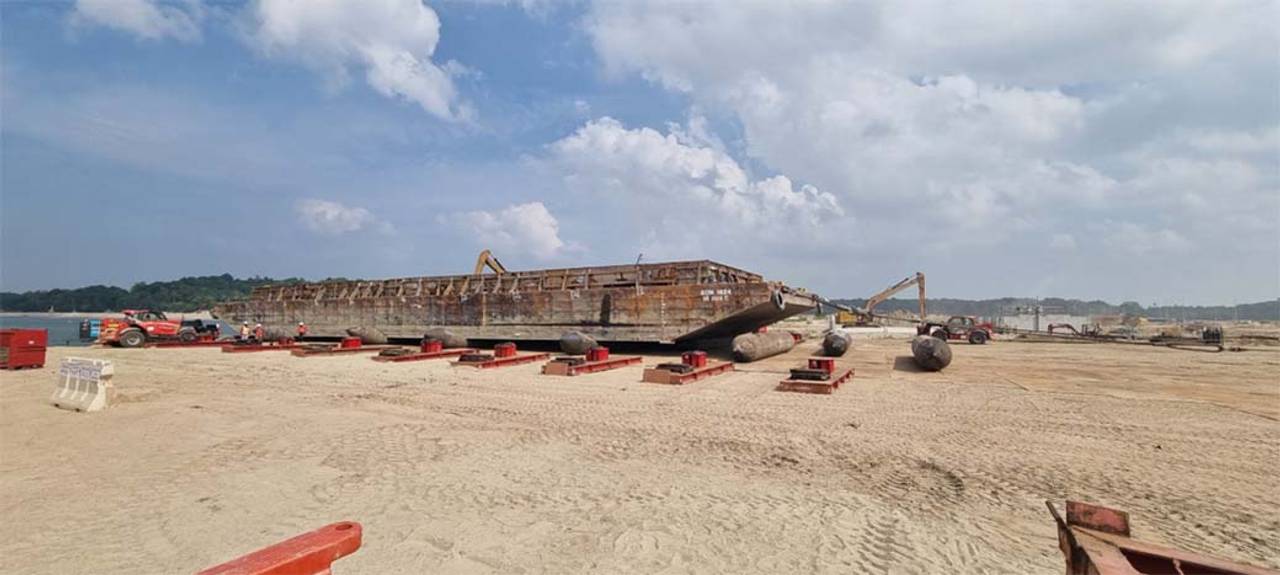
As part of the project, a stormwater collection pond within the polder was constructed to collect excess stormwater. Various floating equipment and barges were used to deepen this large body of water. Once it was completed, the equipment and barges – now landlocked – needed to be retrieved and relocated for continued operations.
Transporting barges
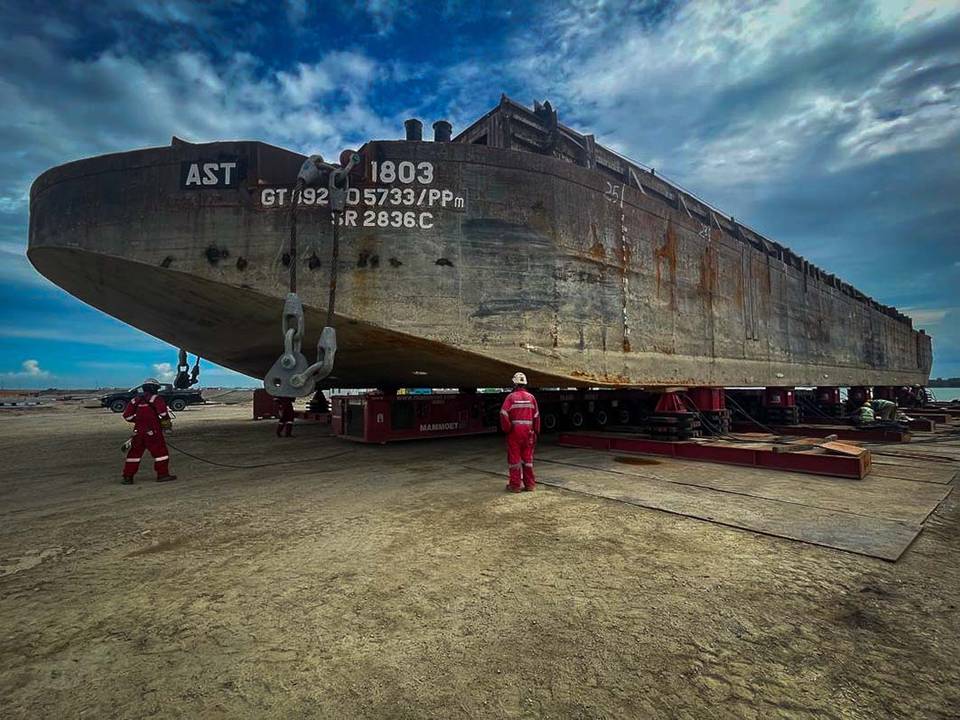
A total of 12 barges, ranging in weight from 680 to 990 t, had to be recovered from the stormwater collection pond, transported across the newly built haul road to the dike, and launched back into the sea – a complex undertaking requiring advanced technical expertise and specialised equipment.
Mammoet was selected for the task due to its extensive experience and successful track record on similar projects worldwide, particularly in using airbags and winches for vessel launching. A team of local and international experts was assembled, bringing a wealth of knowledge to the site.
The project advanced in carefully planned phases. Mammoet used 68 airbags and four winches, with capacities ranging from 60 to 85 t, to retrieve and launch each barge from the designated pond. Precision and careful management were essential to ensuring the safe extraction of the barges.
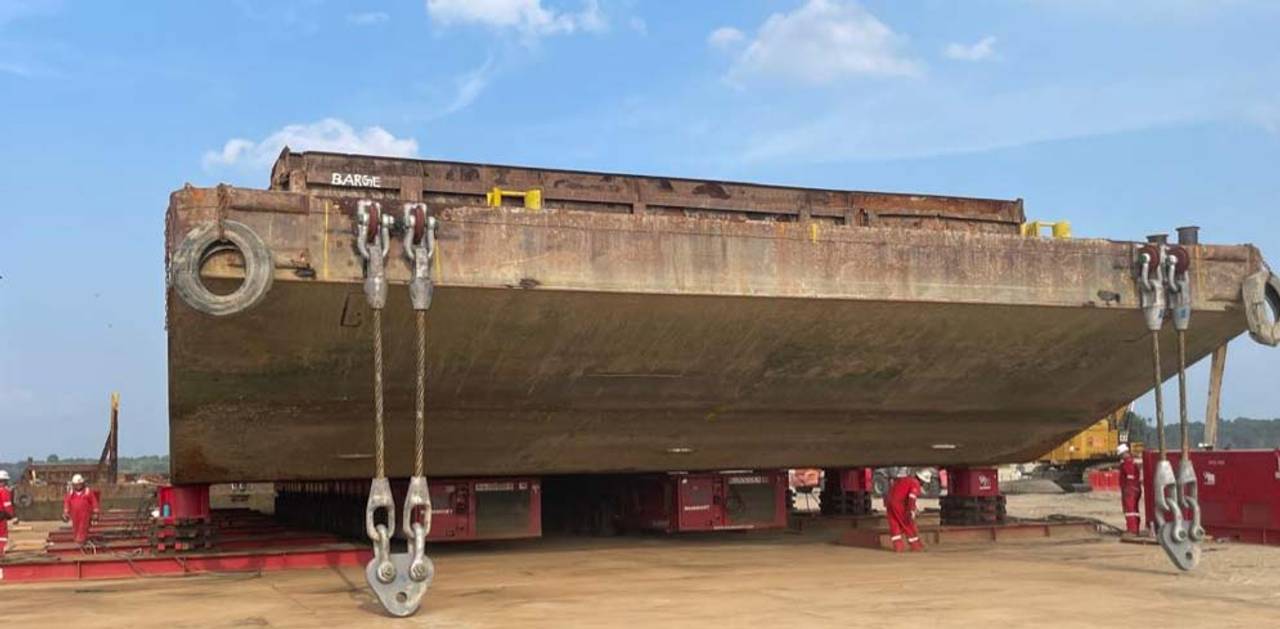
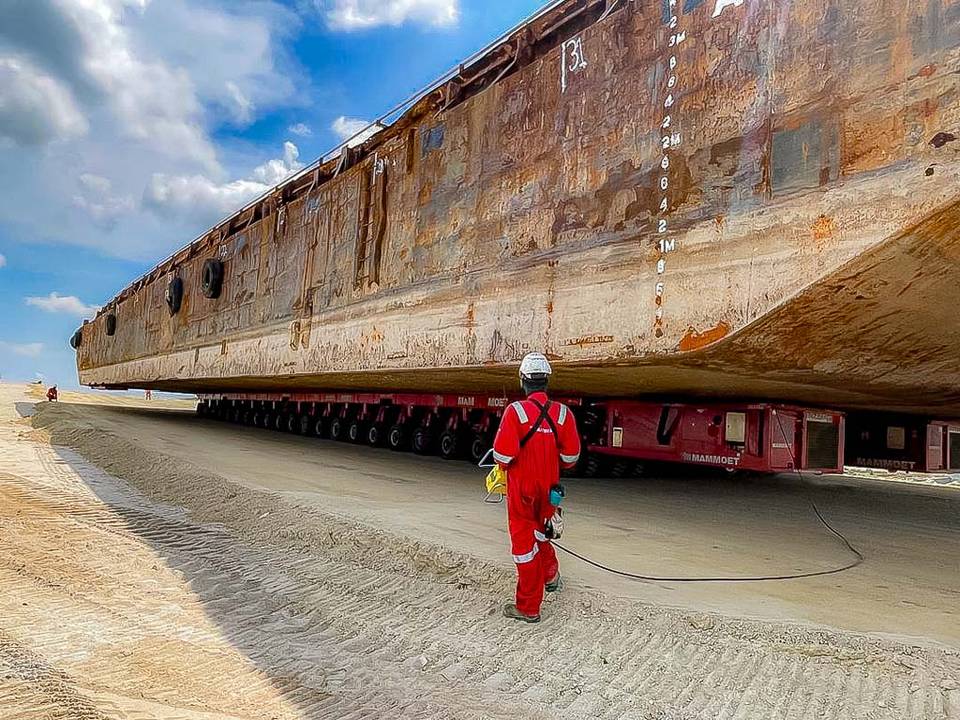
Airbags were placed under the bow of each barge, and once all cables were connected, two winches pulled the barge out of the water to a point where 18 climbing jacks were positioned. Once the barge was retrieved, it was jacked up to allow the airbags to be removed and SPMTs (self-propelled modular transporters) were inserted underneath.
The SPMTs then transported each barge to the launch area, to be set afloat. The launch process mirrored the retrieval operation, and this was repeated for all 12 barges.
Despite unforeseen weather conditions, Mammoet adhered to a strict schedule and was able to meet the tight deadlines.